Eagle and Flag Multilayer 3D SVG Files: A Practical Guide to Integration and Use
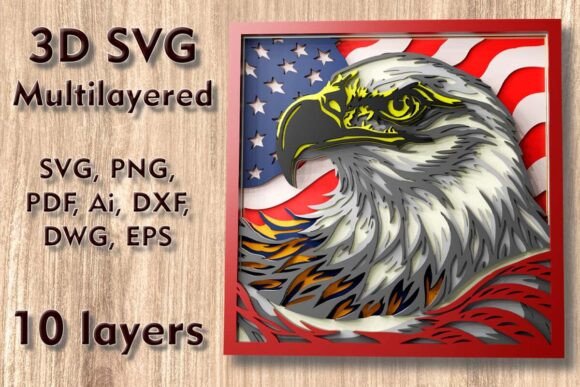
The Eagle and Flag Multilayer 3D SVG Files are a powerful digital asset for crafters, designers, and DIY enthusiasts who want to elevate their home decor or custom projects. This design is ideal for creating layered, intricate wall art that features the iconic imagery of an eagle and flag in a three-dimensional format. The file set includes multiple formats such as SVG, DXF, DWG, EPS, AI, PNG, and PDF, all within a ZIP folder ready for download after purchase. With its precise dimensions—9.85 H x 9.85 W (250 x 250 mm)—this design offers flexibility while maintaining structural integrity when scaled up.
Understanding the Design Structure
This 3D multilayered SVG design is composed of 10 distinct layers, each requiring individual attention during the cutting process. The layers work together to form a cohesive and visually striking piece of wall art when assembled correctly. The design’s complexity makes it suitable for various materials including plywood, paper, cardstock, MDF, wood, acrylic, cardboard, and aluminum. When selecting a material, consider its thickness and how it will interact with your cutting machine to ensure clean and accurate results.
Choosing the Right Tools
The Eagle and Flag Mundala SVG is compatible with several types of cutting machines, including:
- Cricut: Great for beginners and hobbyists using cardstock or thin plywood.
- Silhouette: Offers precision for both paper-based and lightweight materials.
- Glowforge laser cutter: Ideal for achieving fine details on materials like acrylic or wood.
- CNC routers: Perfect for larger-scale production or working with thicker materials.
Each tool has its own setup and requirements, so it's essential to review the compatibility of your machine with the file formats included in the ZIP package before beginning your project.
Preparation and Planning
Before diving into the cutting phase, take time to plan your workflow. Here are some practical tips to get you started:
- Review the Layers: Open the SVG files in a compatible editor to understand the layer breakdown and adjust settings if necessary.
- Select Material Thickness: Since the design is scalable upwards but can lose detail when reduced, choose a material that complements the original size or allows for safe enlargement without compromising quality.
- Prepare Your Workspace: Ensure your cutting machine is calibrated and your workspace is organized to streamline the assembly process later.
- Test a Small Section: If you're new to multilayer designs, cut one or two layers first to test alignment and depth before proceeding with the full set.
Workflow Integration: From Purchase to Display
Integrating these SVG files into your creative process involves several stages. Let’s break down a typical workflow:
1. Download and Unzip the File
After purchasing the Eagle and Flag Multilayer 3D SVG Files, you’ll receive a ZIP folder. Extract the contents to access the different file formats. Choose the one that best suits your software and machine type. For example, use SVG for Cricut or Silhouette, and DXF/DWG for CNC or laser machines.
2. Importing and Reviewing the Design
Open the selected file in your design software. Take note of the number of layers and their order. Proper sequencing is important for stacking and assembling the final piece. Adjust the size if needed, but remember that reducing the design may impact the visibility of thin elements.
3. Cutting Each Layer
Set up your machine according to the material specifications. Use the correct blade or power settings to ensure clean cuts. Cut one layer at a time and label them clearly to avoid confusion during assembly. Consistency in cutting depth and accuracy is key to ensuring the 3D effect looks polished once completed.
4. Assembling the Layers
Once all layers are cut, arrange them based on the design instructions. Use glue or mounting tape to stack the pieces. For added durability, consider reinforcing the back with a base panel made from MDF or cardboard. This step also presents an opportunity to add color, paint, or staining depending on the chosen material.
5. Final Touches and Installation
After assembly, inspect the piece for any gaps or misalignments. Make adjustments if needed. Once satisfied, hang your finished 3D Eagle and Flag wall art using appropriate hardware. You can also customize the piece further by adding lighting, shadow boxes, or glass covers to enhance the visual appeal.
Use Cases and Creative Applications
Beyond standard wall art, this design opens up multiple avenues for creativity. Here are some unique applications:
- Home Decor: Transform a plain wall into a statement piece with layered 3D effects.
- Gifts and Keepsakes: Personalize the design by painting or engraving names, dates, or quotes on specific layers.
- Business Branding: Incorporate the design into branded merchandise, such as wooden signs or acrylic displays for offices or retail spaces.
- Event Decorations: Scale the design for large events or use smaller versions as table centerpieces or signage.
- Art Exhibits: Use multiple copies arranged in patterns to create a gallery-style display.
Each use case benefits from the modularity of the 10-layer design, allowing for customization tailored to specific needs or aesthetics.
Optimizing for Long-Term Use and Reusability
To make the most of your Eagle and Flag Multilayer 3D SVG Files, consider the following strategies:
- Save Original Files: Keep the unmodified ZIP folder in a secure location for future reference or additional projects.
- Organize Layer Files: Create a dedicated folder structure to store each layer separately for easy retrieval and reuse.
- Experiment with Materials: Try different combinations of materials for texture and contrast. Mixing wood with acrylic or paper with metal can yield stunning visual results.
- Repurpose Components: Some layers can be used independently in other projects, such as standalone wall art or decorative accents.
- Document Your Process: Record the steps you took, including machine settings and material choices, to replicate or refine the project later.
Quality Control and Troubleshooting
Creating a detailed 3D design requires attention to detail. Here are some observations and tips to maintain quality throughout the process:
- Material Choice Affects Quality: Thinner materials may curl or warp after cutting. Opt for higher-density cardstock or pre-finished woods for stability.
- Machine Calibration Is Critical: Misaligned blades or incorrect pressure settings can lead to incomplete cuts or uneven edges. Always calibrate your machine before starting.
- Layer Alignment Matters: Even slight misalignment can ruin the 3D illusion. Use a ruler or alignment guide to keep everything straight during assembly.
- Check for Overlaps: In complex designs, overlapping lines or nodes can cause confusion. Clean up the vector paths in your design software to prevent errors.
- Test Glue Adhesion: Not all adhesives work well with every material. Test a small area before gluing all layers together.
Enhancing Creativity with Additional Resources
While the Eagle and Flag Multilayer 3D SVG Files provide a solid foundation, integrating other tools and methods can enhance the outcome:
- Design Software: Programs like Adobe Illustrator or Inkscape allow you to tweak the layers or combine them with other SVG elements for a personalized look.
- Paint and Stain Kits: These can help bring the design to life with rich colors or natural finishes, especially useful for wooden or acrylic versions.
- Backing Panels: Using a backing panel ensures the design remains flat and sturdy when mounted.
- Lighting Accessories: LED strips or recessed lighting behind the artwork can highlight the 3D aspects and create a dramatic effect.
- Community Inspiration: Join online crafting groups or forums to see how others have adapted the design and gain new ideas.
Storage and Organization Tips
After completing your project, proper storage of unused components and digital files is essential. Store leftover materials in labeled bins to preserve their condition for future use. For digital assets, categorize the files under a clear naming convention, such as “Eagle_and_Flag_Layer_01_SVG” or “Eagle_and_Flag_AI_Edit,” to simplify retrieval and editing later.
Additionally, consider archiving the original ZIP file in cloud storage or external drives to safeguard against data loss. Keeping a log of completed projects, including notes on what worked and what didn’t, can also serve as a valuable resource for refining future workflows.
Final Thoughts on Practical Application
The Eagle and Flag Multilayer 3D SVG Files offer more than just a single-use design—they’re a gateway to structured creativity. Whether you're building a seasonal decoration, planning a business promotional item, or simply looking to improve your personal space, these files provide the foundation for high-quality, professional-looking results.
By understanding the design’s structure, choosing the right tools, and following a logical workflow, you can efficiently transform these digital layers into tangible art. Remember, preparation and attention to detail are the cornerstones of success when working with multilayered SVG files. With a bit of planning and the right resources, you can integrate this design seamlessly into your crafting routine and produce something truly memorable.